In Latin America and the Caribbean, female entrepreneurship is not only growing: it is redefining the future of innovation, economic resilience, and social impact. From cutting-edge biotechnology solutions to platforms that dignify care work and inclusive financial technologies, women entrepreneurs in the region are demonstrating that purposeful growth is possible—and scalable.
At IDB Lab, through the WeXchange platform, we promote the growth of women leaders in STEM (science, technology, engineering, and mathematics) fields. Since its creation in 2013, WeXchange has supported more than 4,700 women entrepreneurs from over 30 countries, establishing itself as the leading regional platform connecting women STEMpreneurs with mentors, investors, and key players in the ecosystem. This joint effort by IDB Lab and our partners is helping countries harness the potential of female entrepreneurship as an engine for economic growth and development.
Compelling Data
The data confirms it. Despite facing persistent structural barriers that, for example, limit female participation in STEM fields, women today lead entrepreneurial intent in the region. According to a report by Mastercard (2025), 75% of women in Latin America and the Caribbean have considered starting a business, the highest rate worldwide. Furthermore, investing in female entrepreneurship is also a smart decision from an economic standpoint: startups founded or co-founded by women generate 10% more revenue over a five-year period than those founded solely by men.
In our recent WorkerTech LAC call for proposals, conducted in partnership with Civic House, a total of 126 initiatives were submitted, of which 58.7% are led by women. On the other hand, in our Silver Region report, designed to identify innovative companies, their growth challenges, and their commitment to the humanization of elder care, we found that out of a sample of 339 companies, 52% are headed and led by women.
In this context, at IDB Lab we have provided support, financing, and strategic connections to numerous initiatives led by women that are now generating a high impact from Latin America and the Caribbean to the rest of the world.
Below, we present four inspiring solutions that we have supported and that are helping to address key development challenges in our region.
Conservation Enters the Digital Age
TERRASOS is a company in Colombia founded by Mariana Sarmiento, an expert in biodiversity and public policy. The startup focuses on environmental conservation through Habitat Banks, strategic areas where biodiversity is restored in a professional and verifiable manner. Its business model allows companies and individuals to protect ecosystems through Tebu, a blockchain-based biodiversity unit. Terrasos is part of the IDB Lab project portfolio.
By early 2026, they had protected more than 6,950 hectares and mobilized $7 million in investment. In addition, they have established themselves as the largest publisher of biological data in the private sector, documenting the recovery of endangered species such as the red-fronted parrot and demonstrating that conservation can be a driver of rural employment and scientific transparency.
From the Laboratory to the Immune System: The Personalized Vaccine That Seeks to Change Oncology
The biotechnology startup SphereBio in Argentina is tackling cancer treatment by developing personalized therapeutic vaccines based on XSpheres technology, which uses nanovehicles and artificial intelligence algorithms to train the patient's immune system to selectively identify and destroy tumors.
With an initial investment of $200,000 and technological validation recognized internationally by institutions such as Harvard University, the initiative not only represents a disruptive advance over traditional RNA vaccines by capturing a greater number of tumor markers. At the same time, it positions Latin American science at the forefront of precision medicine, currently projecting investment rounds of up to US$5 million to scale its preclinical and clinical trials globally. Julieta Luz Porta is one of the founders and current CEO of this company, where she leads a team of scientists. In addition, in 2024 she was one of the winners of our WeXchange call for proposals.
Credit with Alternative Data: The Formula That Is Changing Financial Inclusion
Quipu in Colombia is a financial technology company that closes credit exclusion gaps in the country through an artificial intelligence scoring system that uses alternative data—such as payment behavior and digital sales—to finance micro-enterprises that do not fit into the traditional banking model. The company was co-founded in 2021 by Mercedes Bidart, following an incubation process at the MIT Design Incubator. Mercedes was one of the winners of the 2025 edition of WeXchange. Its model focuses especially on women entrepreneurs and the migrant population, offering products such as "Crédito Escalera" (Ladder Credit) so that businesses can grow gradually and abandon informal "payday" financing.
The impact of this strategy is evident in its 2025 results, where it has managed to almost double the number of customers benefiting, reach more than 174,000 credit applications, and drastically reduce the default rate from 29.7% to 15.4%, demonstrating that the inclusion of grassroots sectors is viable and financially healthy.
Care Goes Digital: Contracts, Quotes, and Real Jobs in a Single App
The startup DomestikCo, founded in 2024 by Chilean Catalina Kawas, builds digital infrastructure to transform informal care into a formal, traceable, and sustainable economic system. Its model integrates labor formalization through an app that manages contracts and contributions, certified training through a WhatsApp academy focused on women over 50, and placement in real jobs.
In terms of impact, after 18 months of operation, the platform has been used by more than 1,300 users, formalizing the employment of more than 350 women. This systemic approach seeks to dignify care work and turn it into an engine of the silver economy with the potential for replication throughout the region.
Challenges and Projections on a Larger Scale
Despite its enormous economic potential, female entrepreneurship continues to face significant barriers. Our wX Insights 2024 report indicates that of the total invested by venture capital in the region in 2022, only 0.6% went to teams composed exclusively of women.
At IDB Lab, we are working to ensure that innovation and entrepreneurship ecosystems offer equal opportunities and take full advantage of talent.
Although numerous gaps remain, the dynamism generated by female founders, leaders and entrepreneurs, points to a positive and resilient transformation of the economy throughout the region, with concrete impacts on innovation, collaboration, and development.
To learn more, we invite you to explore the winning initiatives of WeXchange Women STEMpreneurs 2025 and discover the lessons learned in our recent publications: Promoting women's entrepreneurship in STEM and Unlocking potential: the real impact of virtual training for women entrepreneurs in Latin America and the Caribbean.
Isabela Echeverry Peñón
Senior Specialist in the Ecosystem Building and Acceleration Division / IDB Lab
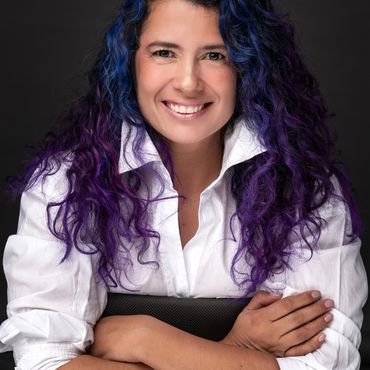
Carolina Carrasco
Lead Specialist / IDB Lab